Guji Uraga
Natural · East Guji, Ethiopia
Red berries, strawberry, lemon blossom.
- Grade
- G1
- Roast
- Light
- Price
- $25.00 · 12 oz
- Status
- Pre-order

Qelem is the Amharic word for color. Each Ethiopian coffee we serve has its own, from red berries to blueberry jam to jasmine tea.

The horn
In the Horn of Africa, a horn calls people in. It carries across the hills and says: come, sit, there is a cup waiting.
Coffee began in these same hills. Arabica, the coffee most of the world drinks, is native to the forests of Ethiopia. The old story says a goat herder named Kaldi saw his goats dancing after eating red cherries. Families here have gathered around the roasting, the smoke and the three rounds ever since.
We wrapped the horn in thread, one color for every flavor that comes to the cup.
The colors
Each thread on the horn is a flavor. Tap a color to see the coffee.
Natural · East Guji, Ethiopia
Red berries, strawberry, lemon blossom.
Natural · Guji, Ethiopia
Blueberry, jammy, cocoa.
Washed · Gedeo, Ethiopia
Floral, citrus, delicate.
Washed · West Guji, Ethiopia
Clean, floral, tea-like.
Natural · Harar, Ethiopia
Wild and winey, with spice. Our own notes after we cup our roast.
More colors are coming. Ethiopia first, then wherever the horn leads.
The ceremony
In an Ethiopian coffee ceremony, the coffee is poured in three rounds, and nobody leaves before the third. Each round has its own character, and each one is a reason to stay.
The first cup, the strongest. The one everyone waits for.
The second cup is where the conversation opens. Stories, news and laughter.
The third is the blessing. The whole table is wished well.
The cup
We ask for a light roast so the fruit and the flowers stay loud. In every cup you can taste the hands that grew it, the hands that roasted it, and the hands that poured it.
Lift the cup slowly. First the red berries, then the lemon blossom. That is what we mean by Qelem.
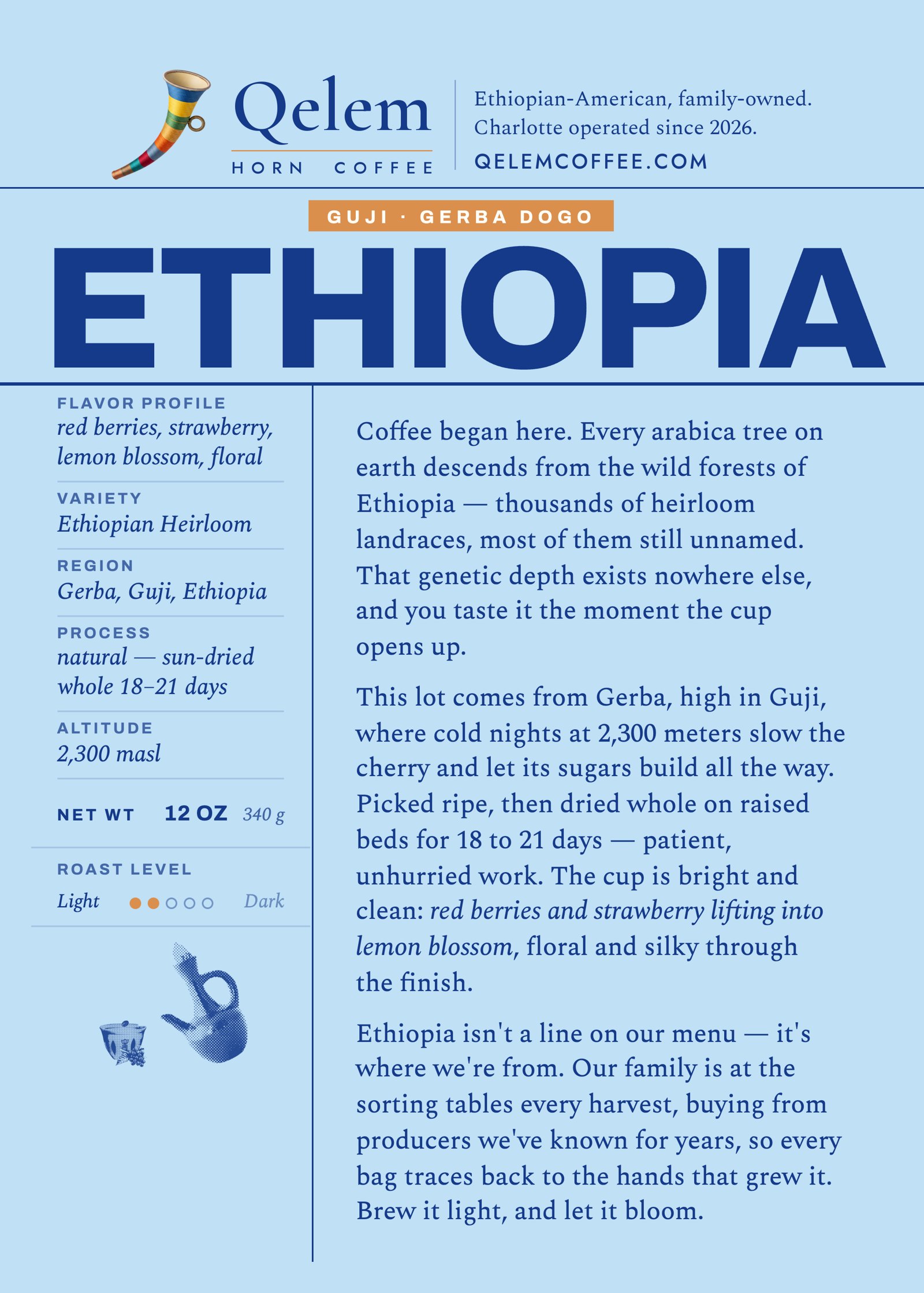
Tap the bag to read the label
The first bag
Single origin, no blends · natural process · light roast · whole bean · 12 oz and 10 lb
$25.00 · 12 oz · pre-order
Red berries, strawberry, lemon blossom.
Online checkout is coming soon. For now, pre-order by email and we will write back with the roast and delivery date.
The road
Gerba, Guji, at 2,300 meters. Cold nights, slow cherry, a lot of sugar.
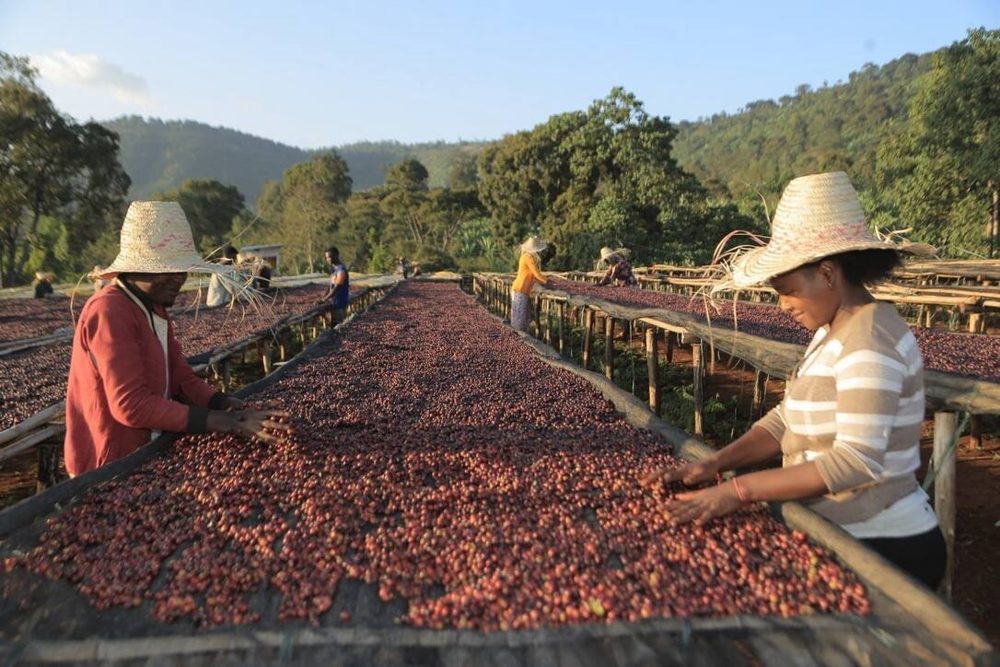
Whole cherries on raised beds for 18–21 days. Slow, on purpose.
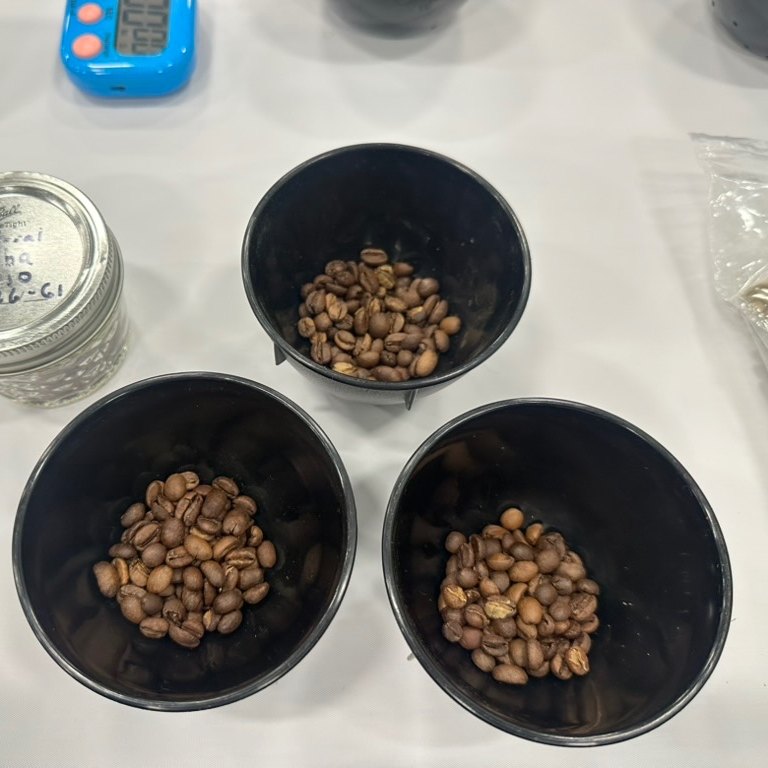
Roasted light, so the fruit and flowers stay loud.
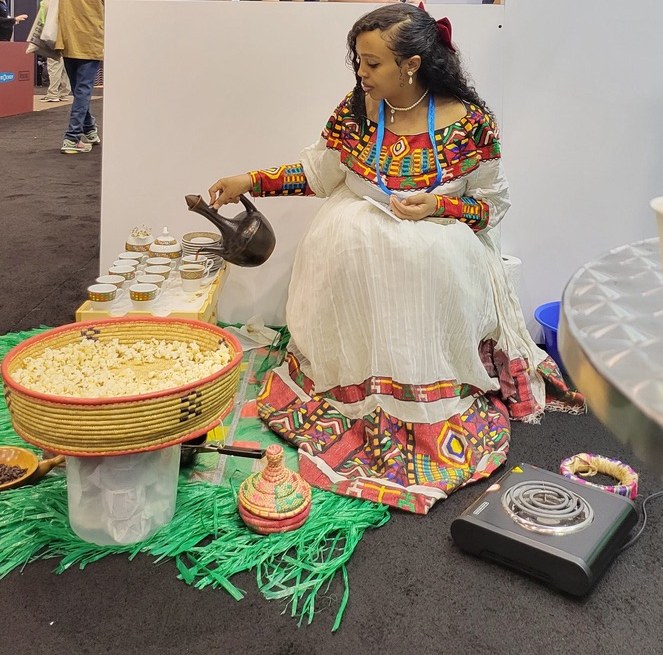
Poured the way it has always been poured.
Our story
We met in Ethiopia in 2020. Coffee was already the language there: a cup poured slowly, a table that does not rush.
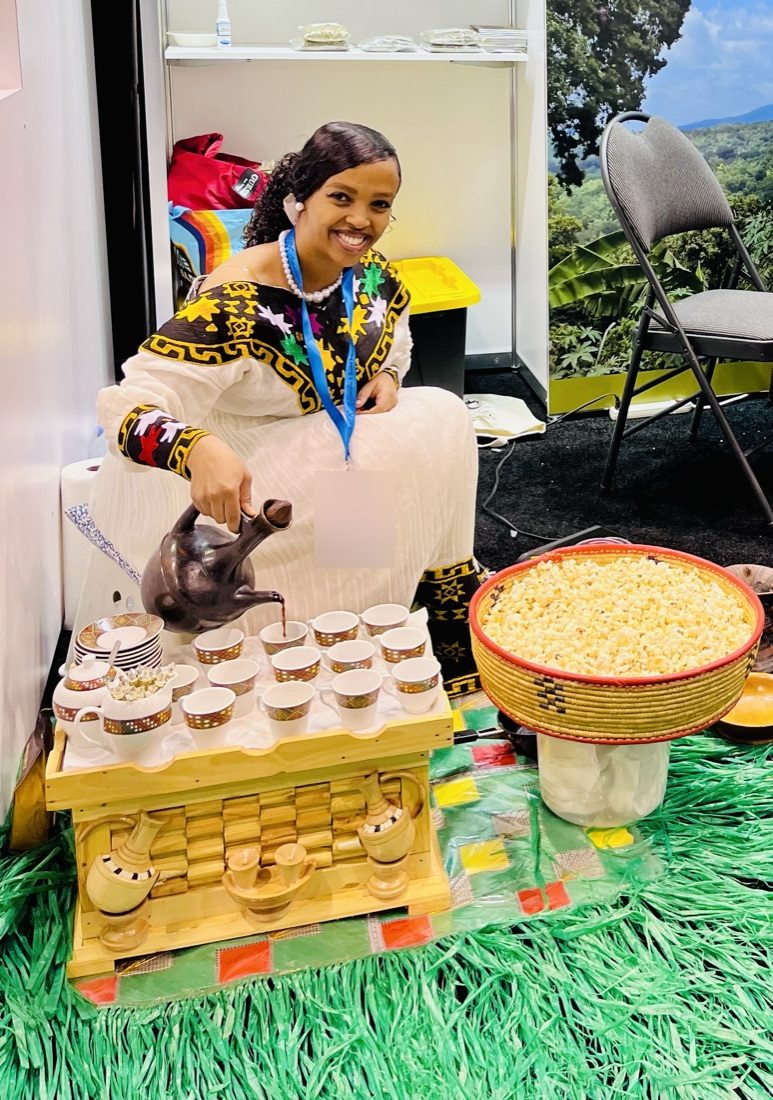
Deborah learned the ceremony the way it has always been taught, by growing up inside it. She pours it from a jebena in three rounds, and she knows what makes a cup excellent.
This January our family spent the first three weeks in Addis, for a wedding and for family. What stayed with us was the color of the celebration. We wanted a coffee that tastes like that.
I am a chemist by training. I studied organic chemistry, and I look at a roast the way I look at a reaction: heat, time, sugars and acids. Deborah knows the pour. I know the chemistry. The coffee needs both.
The roast
A roast is heat moving through a bean. Three things happen, and the order matters.
Green coffee is about 10 to 12 percent water. The first minutes of a roast drive most of it off.
Sugars and amino acids react, the Maillard reaction, and sugars caramelize. This browning builds sweetness and aroma.
Around 195 to 200 °C the beans crack as steam and gas escape. A light roast ends soon after, before the delicate fruit and flower compounds cook away.
That is why we ask for a light roast: so the fruit and flowers stay loud.
Brew it right
Japanese coffee culture treats brewing as a craft: patience, a slow pour, nothing wasted. A light roast rewards that care, so we borrow the method.
15 g coffee, 240 g water at about 94 °C, medium-fine grind. Bloom with 30 g for 40 seconds, then pour slowly. Aim to finish near 2:45.
20 g coffee, 120 g hot water at about 94 °C poured over 80 g of ice. The coffee chills as it drips, and the fruit stays bright.
Fine grind, simmered in the jebena, poured in three rounds: Abol, Tona, Baraka. We teach it at our pours.
Starting points. Too sour? Grind finer. Too bitter? Grind coarser.

The owners
We are an Ethiopian-American family. Deborah leads the company as CEO and pours coffee the traditional way, from a jebena, at coffee events.
We started Qelem to bring the coffee we grew up with to Charlotte, and to put every color of Ethiopian coffee in one cup, one flavor at a time.
Our coffee comes straight from Ethiopia. It is roasted to our light profile, and every bag traces back to where it grew.
Pour with us
Our first bags are on the way. Find us at events around the region, or write to us to reserve a bag.
Coffee ceremonies and tastings in Charlotte and beyond. Dates will be posted here.
Online ordering is coming soon. Email us to reserve one of the first.
Cafés, shops and gatherings: ask about wholesale and event pours.